Saturday, 8 February 2014

The weather in chaos

 
We were ringing bells in Whitehaven in the middle of yet another storm. Here's a view from the church porch where I sat reading an article in Physics World about chaos theory. Weather is a chaotic system. It goes round and round but never quite repeating itself. It is cyclic in the sense that roughly the same sort of weather happens at roughly the same time each year. In Chaos Theory there are settled motions called Strange Attractors. Systems can flip between attractors. Maybe the awful spate of storms in the UK at the moment is one attractor. Something will need to dislodge the weather into another attractor, another pattern of weather.

Friday, 7 February 2014

Focusing on an iPad

 
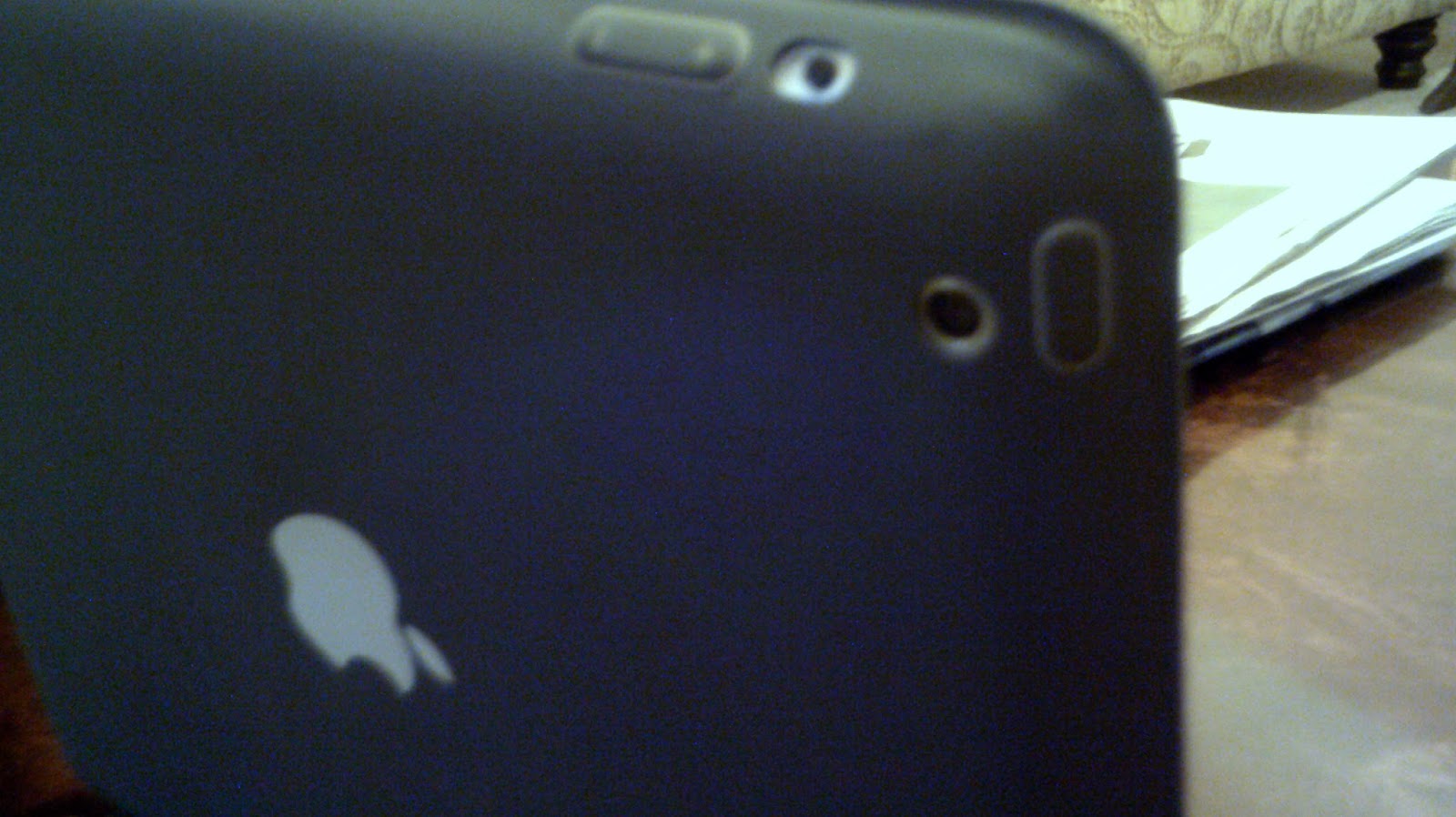
Before you ask, no, this isn't mine. Being a Luddite I haven't succumbed. But I wanted to check out what I'd been reading about the short focal length of the camera. The optics seemed very good but the focal length looks to be about 1cm. Now focal power = 1/focal length. 1/0.01m is 100 Dioptres. That's a strong lens. I'll need to work out how strong my glasses are but they are diverging lenses so it won't be as easy to work out.

Thursday, 6 February 2014

A new wind turbine

It looks like they are putting up a new wind turbine at Great Orton near the Watchtree Nature Reserve. The bottom picture was taken through the reserve's telescope. It takes energy to build any power station. You just hope that it generates more energy when it is working than is used making it. Although actually that's a problematic statement because it implies that turbines make energy. They don't. They harvest the wind's kinetic energy and transform it into useful electrical energy. I've heard people say that more carbon dioxide is released making the concrete base than is saved by using wind power but I've never seen any hard data to support this claim.


Wednesday, 5 February 2014

Cooling my computer

Here is the heat sink from my computer. It's made of aluminium and has a fan on the top. Notice that it is not solid. It is made of thin layers of metal to give it a big surface area. More on that later. Computers have miniature circuits which overheat easily. That can destroy delicate components so they need to lose thermal energy quickly and efficiently.


Notice that under the microprocessor mount there is white paste. This is conducting paste/ It means that the thermal energy from the microprocessor conducts easily into metal. The metal conducts thermal energy because it contains free electrons. These are able to go on ahead to hit other atoms and make them vibrate. Remember that conduction is when one atom hits the next and makes it wobble!

 
The large surface area is to enable the thermal energy to be passed on to the air by conduction. Then there would naturally be convection in the air. It would become less dense and rise. The fans speeds up this process. It removes the warm air quickly and replaces it with cooler air. If cooler air is touching the hot metal then the conduction process will go more quickly. If the metal and the air became the same temperature then there would be no further net conduction. The fact that the aluminium is silver means that heat radiation is not an important process. In fact, it could cause problems by being absorbed by other parts inside the computer and causing it to overheat.

Tuesday, 4 February 2014

A calmer sea at Silloth


We walked in lovely sunshine at Silloth today. The tide was coming in. I noticed a mismatch between the surface waves and the tidal current. The waves are coming top left to bottom right in the photograph. The tidal current moves left to right. I wonder if the waves are always in this direction? I will remember to look. The wind was blowing left to right so the waves were not lined up with the wind. In the photograph, the tidal current hit the groyne. It flowed over it in the same way that a river flows over a step in a weir. I think the water must have gone faster at this point because the wave seemed to stretch sideways - see the wedge of clearer water in the middle. Then there was an area of turbulence. Could this be a version of the aerofoil effect? And notice that because it is a wedge, my proposed speed change must be more pronounced further out.

Sunday, 2 February 2014

Momentum and waves at Silloth

 
Look at the wave hitting the vertical end of the breakwater. The water has been thrown vertically upwards. This means that a force must have been acting on it in the vertical direction. That's odd if you think that a wave is coming in horizontally and hitting a vertical surface. The contact force between the wave and the surface should act at 90 degrees to the surface and thus act horizontally in the opposite direction to the direction of the wave. I think that the wave itself must have been moving vertically at the time of impact so that it did have some initial momentum in this direction. Also, the end of the breakwater probably isn't truly vertical but I didn't fancy going to find out at the time that I took the photograph. But with lots of news coverage of similar waves at places like Aberystwyth, something is causing the waves to go up vertically.

Saturday, 1 February 2014

Newton's Law and Lifeboats


Silloth lifeboat was out on the very high tide this morning. The sea was very stormy. These two photographs show the boat launching itself off one of the waves. I think that some aspects can be explained by Newton's First Law. This says that if no other force acts on an object it carries on in a straight line at constant speed if it is already moving. Let's assume that the boat is not accelerating. When the wave falls away beneath it, the boat carries on through the air as shown. Now actually gravity acts on the boat pulling it down as well, so instead of a straight line we'll get a parabola. The boat must be moving faster than the waves for this to happen.