Sunday, 13 October 2019

The sound of the rain by Derwent Water


Mrs B made an interesting observation on a very wet Duke of Edinburgh checkpoint by Derwent Water. Out in the open when the rain hits the umbrella, you get a higher frequency sound than when you stand under the trees. I suspect that the drips from the trees are bigger drops, so does that mean that with umbrella fabric you get a deeper note if you hit it harder? I can't believe that this is true for a drum, but further thinking is needed.

Thursday, 10 October 2019

Volcaniclastic sediment on Bowfell


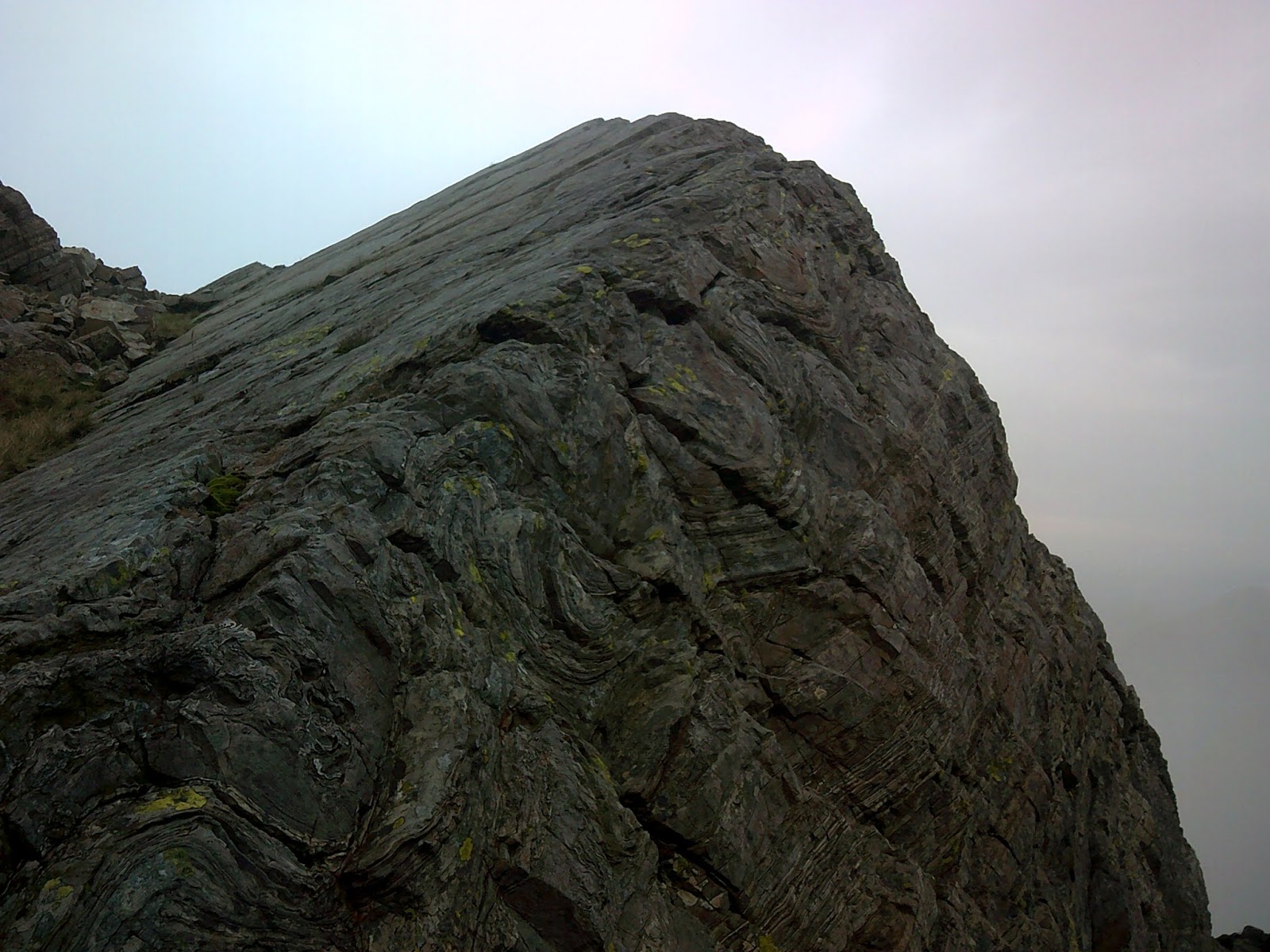
Following Paul Gannon's book, we went to see the volcaniclastic sediments on Bowfell on the way up from Three Tarns. These layers are the back on the Great Slab, which is the top sloping layer of these sediments. These layers are apparently formed from dust and ash from volcanoes that settled in the bottom of lakes in the large Scafell Caldera. He talks about volcaniclastic sandstone so I went to see the thick darker band. It is made of lumps a bit like large barnacles. He also says that some layers were disturbed by earth tremors before they had fully solidified and so have swirled patterns. I found these


Wednesday, 9 October 2019

4 probe method for resistance

It turns out that the regular method that I use for measuring resistance is called the 4 probe method. In this experiment I am running current through a wire and measuring the voltage. As I change the length of wire, I adjust the potentiometer to keep the current the same. I measure the voltage each time and divide by the current to get the resistance. I was taught the method many years ago by a wide older colleague who said that the constant current keeps the temperature of the wire constant and eliminates it as a variable. This must be true. But in the 4 probe method, the current is kept constant to eliminate the effect of contact resistance. In the 2 probe method, the voltage is kept constant whilst the current is varied. The current flows through the contacts and there must be a potential difference across the contacts which means that the voltage recorded will not be the true value. As the current changes, that potential difference will also change since p.d.=IR. In this 4 probe method, no current flows through the voltmeter if it has sufficiently large resistance so there is no contact resistance p.d. and the voltage recorded is true.

Monday, 7 October 2019

Bad Step Tuffs

I have finally found a book that is helping me to make sense of the Scafell Caldera. Cumbria Libraries have multiple copies. I found it first as a Google Book with this search https://books.google.co.uk/books?id=cjwfT_nDvLQC&pg=PA53&lpg=PA53&dq=paul+gannon+scafell+caldera&source=bl&ots=TShZ0eZEtr&sig=ACfU3U1jaN3oIxGGNNFVKZ0JfiYXTx_VrA&hl=en&sa=X&ved=2ahUKEwj0iYLaoIjlAhVhoFwKHVRYDkcQ6AEwAnoECAkQAQ#v=onepage&q=paul%20gannon%20scafell%20caldera&f=false
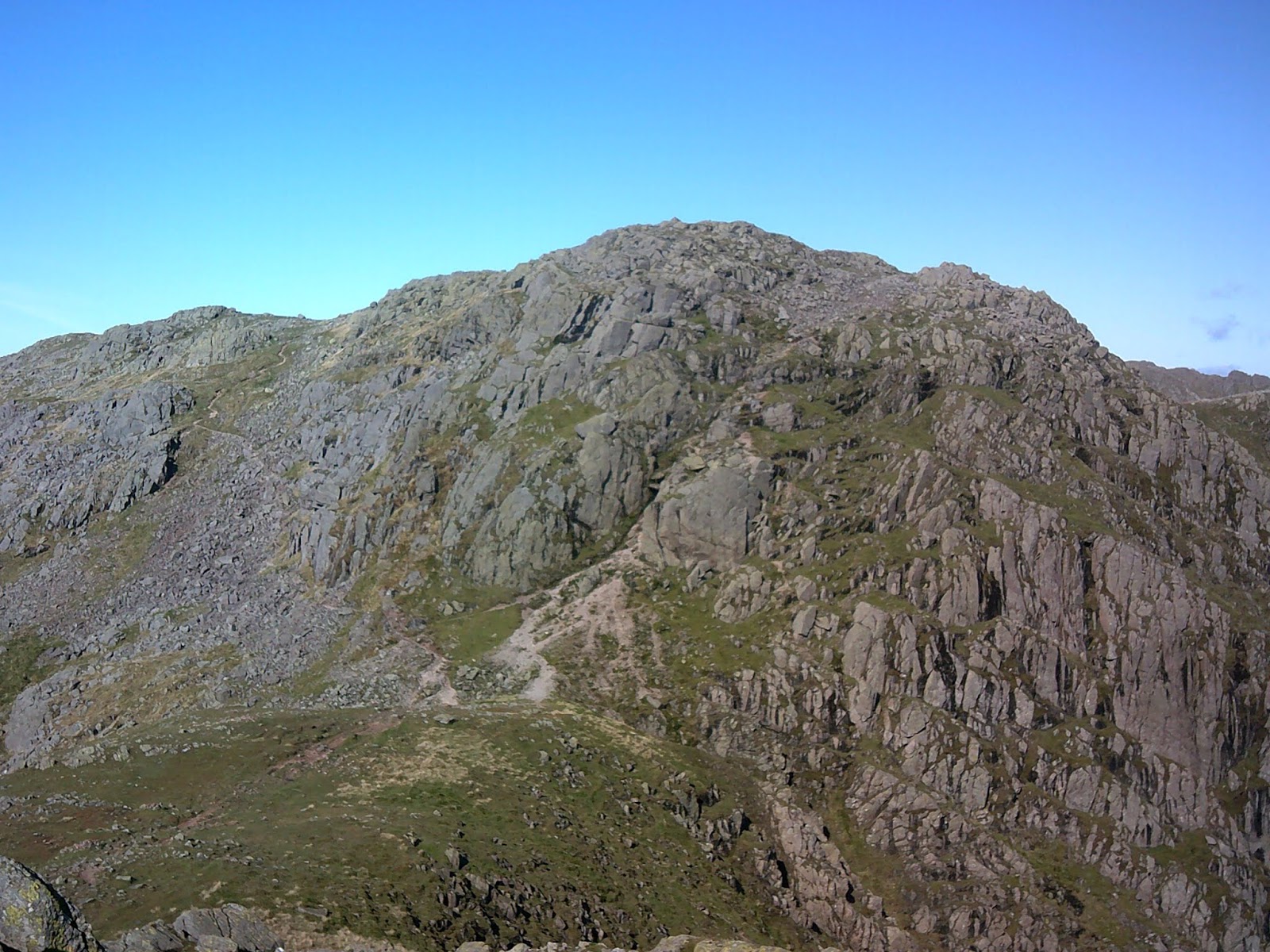
He has sorted out for me the Borrowdale Volcanics. Apparently there were two phases - the Lower Borrowdale Volcanic Group and the Upper BVG. Lower was lava and Upper was explosive. Upper was the time of the Scafell Caldera. The explosive erruptions produced a lot of dust and ash which fell to earth, settling in lagoons in the caldera and becoming sedimentary rock. It began to make sense of this document http://nora.nerc.ac.uk/id/eprint/3234/1/RR01007.pdf . As we were going up Crinkle Crags, I decide to look out for the tuffs listed on page 21 of Geological Survey document. Here's the approach to the Bad Step
 I picked up the rock below in the vicinity. It is certainly weathered pink but whether it is really a Bad Step tuff as opposed to any of the other identified Crinkle ones I'm not qualified to say. There must have been a lot of individual eruptions in the area.


Sunday, 6 October 2019

Odd shadows

 The shadows above perplexed me, appearing to give me a halo. Then it occurred to me that what seemed like a halogen spotlight in the ceiling above was probably an LED replacement version, Sure enough, by using my fingers in a strobing pattern, I was able to see 3 white LEDs. The photo I took below somehow comes up with a ghosted image of them. The dark part of the shadow must be where my head was blocking out light from all 3 LEDs. The halo will be shadow caused by just 1.

Saturday, 5 October 2019

Raindrop lenses on Helm Crag

The lensing effect of these raindrops on Soft Rush is impressive. We must be further away than the Principal Focus because the image is inverted. The white bottom of the drop is actually the sky. The image is smaller or diminished which means we are beyond twice the focal length. Another time I need to try to measure the focal length. Here's what was being focused, on a moody day above Grasmere

Tuesday, 1 October 2019

Two terminal method for resistance

I had thought that an ohmmeter was an example of the two probe method for measuring resistance but it seems that a modern meter is probably actually a disguised 4 probe method. https://en.wikipedia.org/wiki/Ohmmeter I know that on old meters, you had to zero it every time before you started. The old meters were really just recalibrated ammeters and worked on the principle that a bigger resistance produced a smaller current. It seems that these modern ohmmeters put a constant current through and measure the voltage. A problem with this method of measuring resistance is the resistance of the leads (as shown below) and the unknown problem of contact resistance.